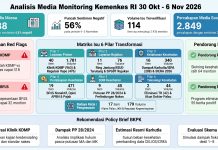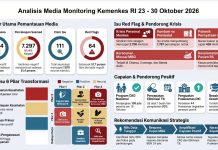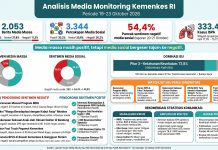

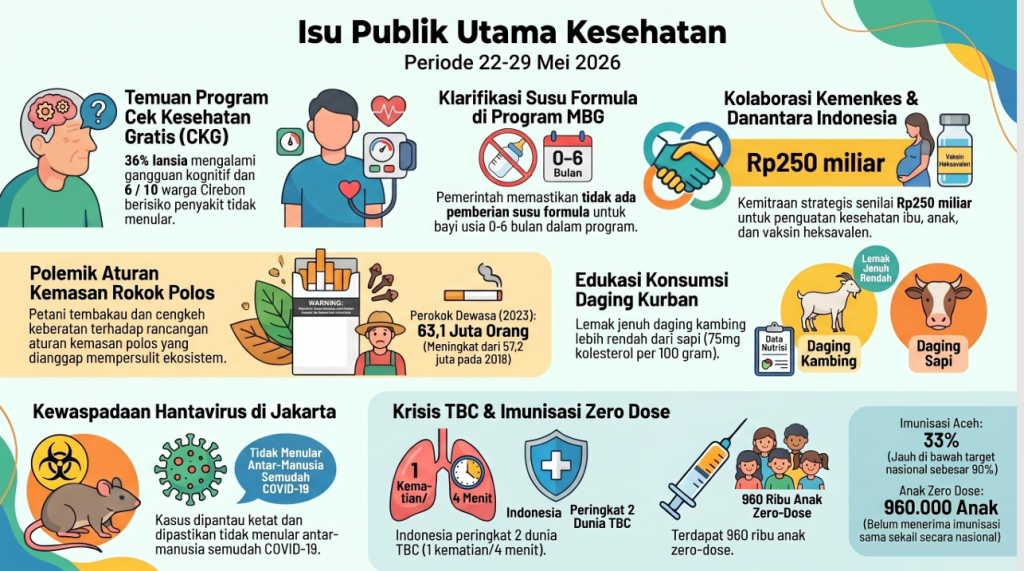
Overall, the mainstream media coverage of health issues during the period of May 22-29, 2026, was dominated by a very stable positive sentiment, ranging from 84% to 86%. This high level of positive sentiment was supported by good exposure to priority agendas and the government's swift response in addressing various issues. Several key topics driving this positive sentiment included enthusiasm for the Free Health Check (CKG) program, the responsiveness in handling Hantavirus cases, early warnings for TB control and zero-dose immunization , the launch of a strategic collaboration with Danantara Indonesia Trust, and public education by the Minister of Health regarding the consumption of sacrificial meat during Eid al-Adha.
Amidst the dominance of positive news, the controversy surrounding the draft regulation on standardizing plain cigarette packaging was identified as the largest contributor to negative sentiment in the mass media. Analysis shows that the public discourse on this issue has shifted from its initial focus on health concerns to concerns about the potentially detrimental economic impact on the tobacco industry, the fate of tobacco and clove farmers, and the regional investment climate. Therefore, the Ministry of Health is recommended to refocus its communications narrative on the primary goal of protecting public health, particularly preventing new smokers, and to publish the results of public consultations more transparently through an FAQ infographic.
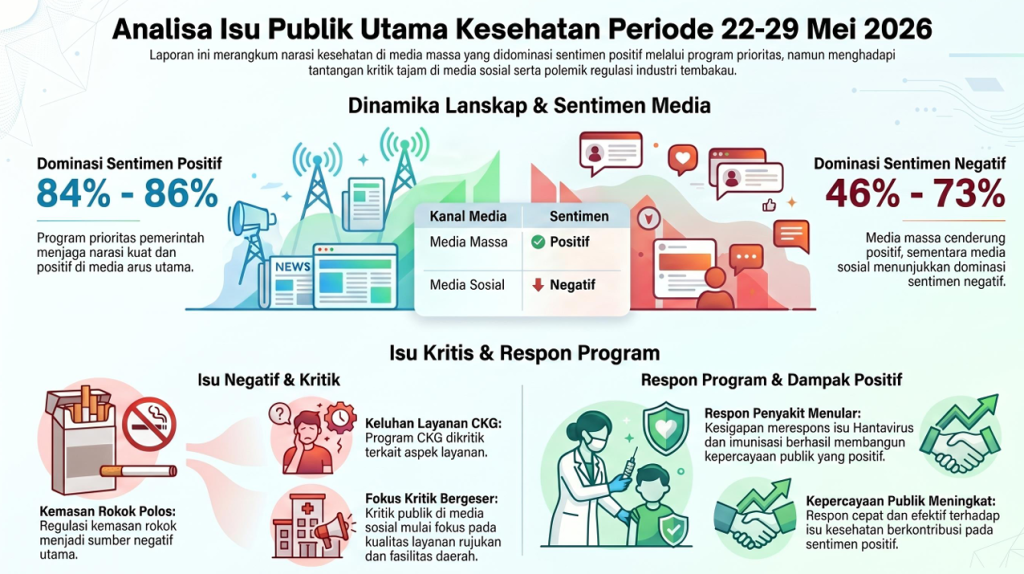
Furthermore, the analysis also found a significant sentiment gap between news coverage in the mass media and conversations on social media. While the mass media was dominated by positive sentiment, social media recorded several times high levels of negative sentiment, even reaching 73%. This negative perception in the digital realm was mostly triggered by public complaints about the quality of emergency services at regional health facilities (such as the case of Dr. Pirngadi Regional Hospital), obstacles to the implementation of CKG services in the field, and polemics over statements from leaders. These findings serve as an alarm for the government to strengthen coordination with regional health care facilities so that problem-solving responses can be carried out more empathetically, factually, and oriented towards improving the service system.