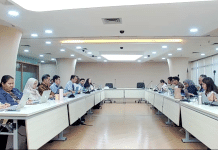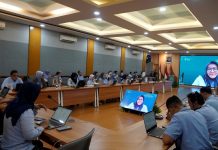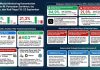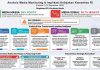


Jakarta – Tuberculosis (TB) remains a public health challenge that requires evidence-based policies, innovation, and cross-sector collaboration. To support the acceleration of TB Elimination by 2030, the Health Development Policy Agency (BKPK) of the Ministry of Health, together with PT Kimia Farma Tbk, held the 2026 National TB Forum on Tuesday (7/7) in Jakarta. The forum, themed " End-to-End Tuberculosis Environment (Innovation, Business & Collaboration )," served as a forum for sharing best practices, innovations, and TB control strategies, while also generating policy recommendations to strengthen TB elimination efforts in Indonesia.
The Head of the Indonesian Corruption Eradication Commission (BKPK), Asnawi Abdullah, stated that TB control is not only a health issue but also a national development issue. "This forum arose from a shared awareness that TB is not just a medical problem, but a strategic issue that affects economic productivity, social protection, and of course, the quality of Indonesia's human resources," he emphasized.
According to Asnawi, various TB control efforts during the 2020-2025 period showed positive progress. This was reflected in a 31 percent increase in case notifications, a 27 percent increase in the number of TB cases treated, and a 13 percent increase in treatment success rates .
To optimize the TB control program, the BKPK continues to conduct various studies to develop more evidence-based policies so that all program innovations have optimal impact and support more effective decision-making. The BKPK has conducted research on the implementation of expanding the use of X-rays in community health centers (Puskesmas), a study on optimizing TB services in private health facilities, and a Cost-Effectiveness Analysis (CEA) for the TB One Stop Service (OSS).
Asnawi explained that the CEA's study of TB screening methods showed more effective results. "Several studies have shown that the screening algorithm using X-rays combined with symptom assessments is more cost-effective than X -rays alone , regardless of the presence or absence of symptoms," he said.
The results of this study will form the basis for developing policy recommendations for more effective and efficient TB control. The BKPK will also oversee the implementation of the TB Prevalence Survey from 2027 to 2030. Furthermore, it will support the use of innovative technologies, such as Artificial Intelligence (AI)-based X-rays and Near Point of Care Testing (N-POCT), to accelerate case detection and improve access to TB diagnostic services.

Furthermore, Deputy Minister of Health II Benjamin Paulus Octavianus in his remarks emphasized, "TB control is one of the government's Fastest Best Results (PHTC) Programs with a target of reducing TB cases by 50 percent in five years."
According to Beny, Indonesia still faces a very high TB burden, requiring a different approach than in previous years. TB control must shift from a passive approach to an active one, using a "fishing in a fish pond" strategy: identifying as many cases as possible through contact tracing integrated with the Free Health Check Program (CKG).
" Tracing must be 100 percent successful. Screening will be added from tracing , but tracing is the first step," he stressed. By 2026, he hopes the Ministry of Health, along with health agencies across Indonesia, can achieve comprehensive contact tracing . Its implementation has been mapped at 53.335 locations in 514 districts/cities across 38 provinces.
In addition, Beny emphasized that the focus of TB control is not only on curing patients, but also identifying other individuals at risk by increasing the coverage of Tuberculosis Prevention Therapy (TPT), especially in people who have close contact with TB patients.
The Deputy Minister of Health also emphasized the importance of building national independence in the development of TB diagnostic tools and vaccines, while ensuring budget support as a government priority to achieve TB elimination.
At the same time, Director General of Pharmaceuticals and Medical Devices Rizka Andalucia explained that the government has increased the budget for the procurement of drugs and consumable medical supplies for TB testing in 2026. This step was taken to ensure logistical availability as TB cases increase.
"The challenge going forward is to ensure that no patient is delayed in receiving therapy, and that there are no obstacles in terms of drug availability, distribution, or financing. So, this has become our goal for TB drug provision," he explained.
The government is also strengthening its real-time drug stock monitoring system through the Electronic Health Logistics Inventory Monitoring System (SMILE) platform, which is integrated with SATUSEHAT.
Rizka added that regional governments play a role in managing TB control in the field, as mandated by Law Number 17 of 2023, Article 314. Furthermore, the government continues to encourage the development of innovation through various ongoing research projects, including the development of TB vaccines, drug-resistant TB (RO) drugs, and Multiple Micronutrient Supplements (MMS) supplementation.
Meanwhile, Acting Director General of Disease Control, Andi Saguni, explained that the program's implementation will focus on 18 priority provinces, which account for approximately 86 percent of the estimated national TB cases. This strategy is supported by digital reporting, expanded close contact tracing in 514 districts/cities, and the development of a One Stop Service (OSS) to facilitate faster and more integrated screening, diagnosis, and treatment.
The 2026 National TB Forum, organized by the Ministry of Health's Anti-Corruption Agency (BKPK) and supported by PT Kimia Farma Tbk, emphasized the importance of collaboration to strengthen evidence-based policies. Synergy between the government, academics, healthcare professionals, community organizations, development partners, and the industrial sector is expected to accelerate the achievement of the 2030 TB Elimination target through innovation, service strengthening, and sustainable policy implementation. (Author: Faza Nur Wulandari, Editor: HDI Work Team)