
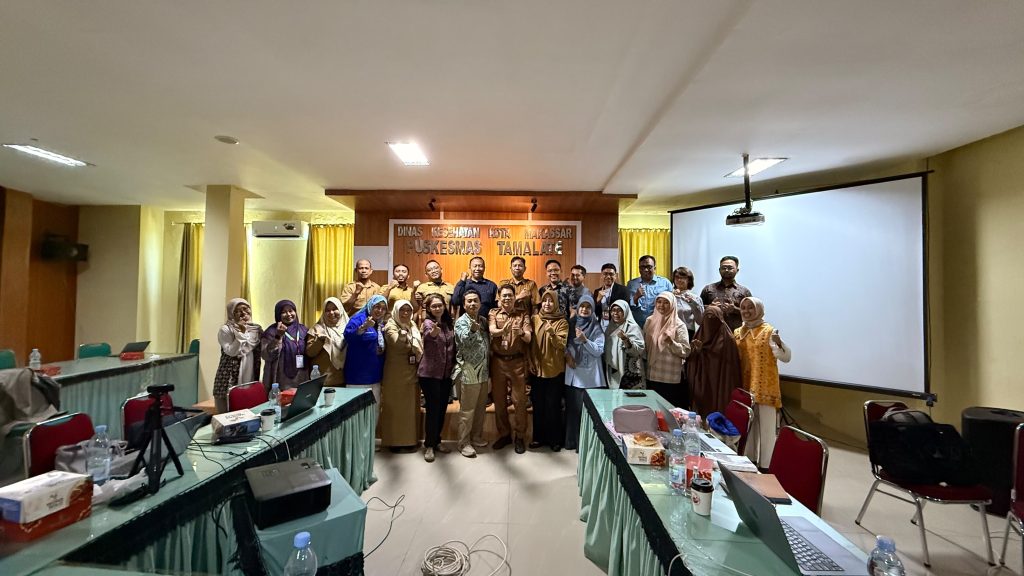
Makassar — The Health Development Policy Agency (BKPK) of the Ministry of Health is strengthening its health policy feedback mechanism as part of its efforts to ensure national policies are more responsive to community needs and implementation conditions in the regions. This strengthening was carried out through a Quarterly Meeting on the Utilization of Health Policy Feedback Mechanisms in South Sulawesi Province from June 30 to July 2, 2026.
Quality health policies are not only determined at the regulatory drafting stage, but also through the government's ability to understand implementation challenges, identify gaps, and make continuous improvements based on evidence and experience in the field.
Through a policy feedback mechanism, the BKPK encourages the formation of a policy learning cycle connecting the central government, regional governments, universities, and development partners. This mechanism is designed to document, analyze, and translate various issues in health policy implementation into recommendations for policy improvement at the national level.
This activity involved the South Sulawesi Provincial Health Office, Makassar City Health Office, Takalar Regency Health Office, South Sulawesi Provincial Bappeda, Makassar Ministry of Health Polytechnic of Health, Hasanuddin University, Makassar State University, Muhammadiyah University of Makassar, Gadjah Mada University, and Results for Development (R4D).
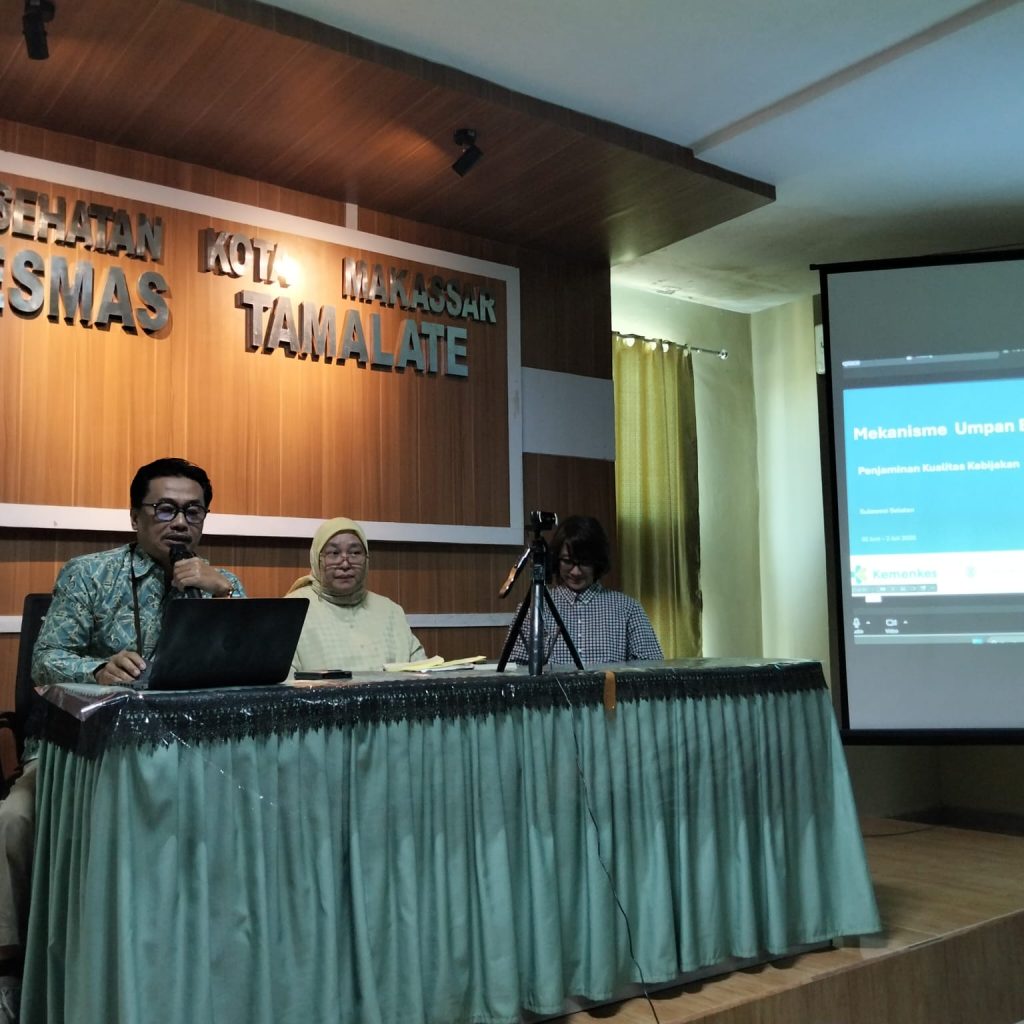
The meeting was attended by representatives from the BKPK (Investigating Agency for Corruption and Development), Bambang Setiaji, and Tince Arniati Jovina, an Associate Expert Policy Analyst. Bambang Setiaji stated that health policy does not stop at formulating regulations; it must ensure that they can be translated, implemented, monitored, evaluated, and improved based on actual conditions on the ground. "Therefore, implementation experiences from the regions must be part of the process of refining national policy," he further explained.
On the same occasion, Tince Arniati stated that policy feedback mechanisms are a crucial tool for strengthening evidence-based health policy governance. "Each region has different characteristics, capacities, challenges, and needs," she explained. Therefore, a systematic mechanism is needed so that lessons learned at the district/city level can provide structured input to provincial and central governments.
Under the developed mechanism, district/city governments play a role in identifying and recording issues in health policy implementation. Provincial governments then analyze and weigh the various inputs to determine priority recommendations, while the BKPK, along with technical panels and national stakeholders, conducts policy reviews to support the ongoing improvement of health policies.
This meeting provided a platform to strengthen the capacity of local governments to conduct policy evaluations. Participants gained an understanding of feedback mechanisms, the use of policy monitoring instruments, the alignment of policy quality indicators, and the development of data-driven recommendations.
This event conducted simulations of policy monitoring instruments at the district/city and provincial levels. These instruments were developed not as individual evaluation tools, but rather as a systems learning approach to identify areas of success, implementation challenges, available evidence, and necessary improvement measures.
Strengthening policy feedback mechanisms is part of the transformation of the BKPK's role as a producer of evidence -informed health policy recommendations . Through this approach, the BKPK strives to ensure that national health policies are strongly linked to the realities of implementation in the regions.
"The availability of quality data and information is the main foundation for producing targeted health policies," said Astara Amania Lubis of Results for Development (R4D).
By strengthening this mechanism, South Sulawesi is expected to become a pilot region in developing a structured, participatory, and sustainable health policy feedback system. Going forward, this mechanism is expected to strengthen the quality of health policy planning, implementation, evaluation, and refinement, thereby having a greater impact on improving public health. (Author: Bambang Setiaji/Editor: HDI Team)