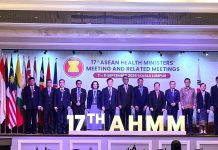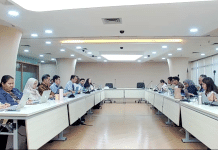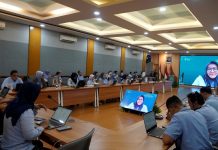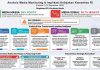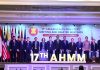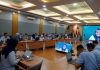


Jakarta – Carrying the tagline “Understand the Process, Accelerate Access for All”, the Health Development Policy Agency (BKPK) held a Socialization and Consultation of the Minister of Health Decree Number 641 of 2026 concerning Guidelines for the Implementation of Independent Health Technology Assessment ( Stakeholder-Led Submission/SLS ) in Jakarta on Thursday (9/7).
Health Technology Assessment ( HTA) is an instrument that ensures that all health technologies, including drugs, medical devices, diagnostics, clinical procedures, and service programs that will be adopted truly provide health benefits at a commensurate cost and are accessible to all levels of society.
The Minister of Health is responsible for ensuring that health technology meets the requirements of effectiveness and cost efficiency. The Minister of Health has established a PTK Committee to provide recommendations on the use of health technology in the National Health Insurance (JKN) Program and other health programs funded by the Ministry of Health.
The Head of the BKPK, Prof. Asnawi Abdullah, in his remarks stated that the PTK team must be built in such a way that it maintains integrity, quality, and independence.
"Technology is important, but resilience is not solely determined by technology but by our wisdom in choosing technology, our wisdom in adopting it, and our wisdom in financing that technology," said Asnawi.
He continued, "This policy certainly won't emerge from a vacuum. It's realized through a transparent, collaborative, and, of course , evidence-based process , based on accurate data, processed through a rigorous , scientific, and accountable mechanism."
Asnawi hopes that with the enactment of KMK Number 641 of 2026, new entry points for PTK will be opened so that the number of PTK studies produced each year can continue to increase or at least approach the number of PTK produced by neighboring countries, such as Thailand.
The issuance of Independent PTK or SLS as a new pathway provides an opportunity for stakeholders, not only industry, to initiate and submit PTK studies independently, with initiatives originating from stakeholders.

In her remarks, the Director General of Pharmaceuticals and Medical Devices at the Ministry of Health, L. Rizka Andalusia, stated that the rise in catastrophic diseases requires a government response to accelerate access to healthcare technology. However, healthcare financing must also be implemented effectively and efficiently through quality control, cost control, and demand control.
Rizka also said that Stakeholder-Led Submission or Independent Health Technology Assessment is a breakthrough to accelerate the PTK evaluation process.
"This independent PTK does not diminish, I repeat, the quality of the study results or the results of the health technology assessment. It is also not oriented towards the interests of only one or two groups, but is truly for the benefit of the community and, once again, for the sustainability of health financing in Indonesia," Rizka emphasized.
Head of the Center for Health Security System Policy, Lupi Trilaksono, in his presentation stated that there is no difference in quality between regular PTK and independent PTK.
"These two pathways complement each other to strengthen the availability of evidence and ensure rapid, accurate, transparent, and accountable recommendations and decisions in health policymaking," Lupi said.
The Chair of the PTK Committee, Prof. Auliya A. Suwantika, stated that robust evidence is the foundation for accurate, efficient, and equitable decision-making . Therefore, the preparation of a dossier must be supported by quality evidence.
"So, ladies and gentlemen, you must prepare strong, relevant, and consistent data. Furthermore, the method must be clear and valid, with minimal bias and transparency," Auliya offered.
Multi-stakeholder collaboration significantly supports the provision of quality evidence. Auliya encourages stakeholders to provide additional documentation in the form of letters of recommendation or support from professional organizations, healthcare facilities, academics, or patient groups, as these can add value. Quality evidence is generated through a structured process involving various multidisciplinary experts, starting with initial discussions on the formulation of research questions , methodology, and other technical aspects.
Director of Production and Distribution of Medical Devices, Directorate General of Pharmaceuticals and Medical Devices, Ministry of Health, Dita Novianti, in closing the event expressed her hope that the SLS would run well in the future and provide greater benefits.
This Minister of Health Decree is based on the need to strengthen evidence-based decision-making and support health system transformation. This policy also aims to accelerate the implementation of Health Technology Assessment through the active participation of stakeholders in a transparent, systematic, and accountable manner.
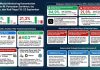
Some important dates to note are the submission of interest ( intention to submit / ITS) on July 9-16, 2026, recording, reviewing, and identifying duplication of topics from ITS received on July 10-26, 2026, and filling out and submitting application documents on July 27-24, 2026. The proposal process can be done through the HTA portal at https://htaindonesia.kemkes.go.id
This meeting aims to provide information regarding the stages of the Independent Health Technology Assessment (PTK), procedures for preparing a robust assessment , and providing a strategic dialogue space for stakeholders in preparing and submitting the results of the Independent PTK assessment.
The hybrid event was attended by committee chairs within the Ministry of Health, representatives from relevant ministries/institutions, professional organizations, hospital organizations, pharmaceutical and medical device industry associations, development partners, research institutions, universities, academics, and patient organizations. (Writer: Evi Suryani, Editor: Timker HDI)