

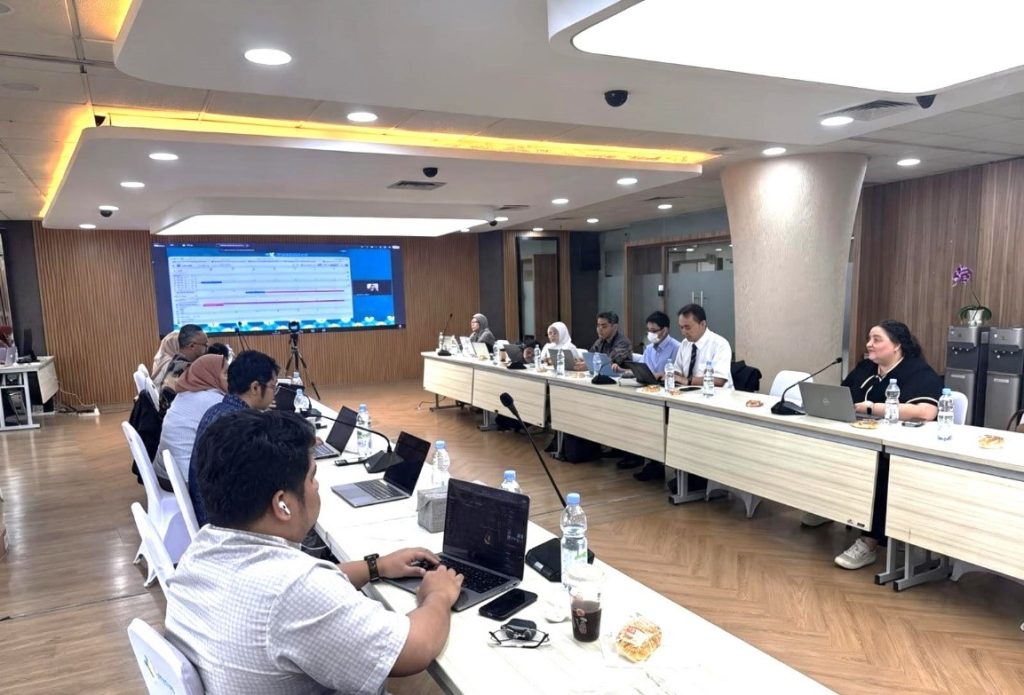
Jakarta – The Indonesian Ministry of Health (Kemenkes RI) led the development of the technical foundation for the ASEAN One Health Priority Pathogen List through an Expert Meeting held in Jakarta on September 16–18, 2026. This meeting was held in Indonesia's capacity as the Lead Country for the ASEAN One Health Network (AOHN) and the Host Country for ACPHEED for Detection and Risk Assessment (DRA).
This meeting also serves as a follow-up to the ASEAN Leaders' Declaration on One Health Initiative , adopted by ASEAN leaders in 2023, and the implementation of the ASEAN One Health Joint Plan of Action 2025-2030. These two agreements mandate the development of a list of priority health threats as a basis for strengthening investment, research, preparedness, early detection, and response to diseases with the potential to cause outbreaks or pandemics in the region.
Present at the meeting were experts from the United States Centers for Disease Control and Prevention (US CDC), Japan International Cooperation Agency (JICA), UK Health Security Agency (UKHSA), representatives of WHO, FAO, WOAH, ASEAN Biological Threats Surveillance Centre (ABVC), representatives from the health, agriculture, forestry, environment sectors, and other development partners.
Head of the Center for Global Health Strategy and Governance Policy at the Ministry of Health, Harditya Suryawanto, in his remarks emphasized that compiling a list of priority pathogens is a strategic step to strengthen regional health resilience through the One Health approach.
" The ASEAN One Health Priority Pathogen List is not just a list of pathogens, but rather a foundation for ASEAN to develop risk-based policies, strengthen preparedness, and guide cross-sectoral cooperation in addressing future health threats. Indonesia is committed to ensuring that the development process is credible, based on scientific evidence, and provides tangible benefits for the entire ASEAN region," Harditya said on Wednesday (September 16).
During the three days of discussions, the participants agreed on several issues, including the refinement of the Terms of Reference (ToR), which cover the objectives, scope, methodology, criteria, decision-making mechanisms, and stages of the ASEAN One Health Priority Pathogen List . They also established an Ad Hoc Prioritization Task Force , which will lead the technical process of compiling the ASEAN priority pathogen list, involving experts and policymakers from ASEAN member countries and partner organizations.
The meeting also agreed on the scope of priority pathogens, namely pathogens that impact humans, animals, plants, and the environment, including zoonotic pathogens that have caused outbreaks or have the potential to cause pandemics and require cross-sector collaboration through the One Health approach . As a methodological basis, the participants also agreed on adapting the One Health Zoonotic Disease Prioritization (OHZDP) to suit the epidemiological characteristics and needs of the ASEAN region.
Grace Goryoka, Public Health Advisor for the US CDC's One Health Office, explained that the One Health Zoonotic Disease Prioritization methodology provides a practical, evidence-based approach that can be adapted to the ASEAN regional context. "Once the priority pathogen list is compiled, ASEAN can continue this process by developing an associated disease list as a reference in preparedness planning and strengthening public health actions in the region," Grace said.
He added that the US CDC together with JICA and UKHSA are ready to support the implementation stages of the preparation of the ASEAN One Health Priority Pathogen List , starting from the preparation of data collection tools , analysis of prioritization results, training for facilitators, to joining the Ad Hoc Prioritization Task Force as facilitators and advisors.
The results of this meeting will later become the basis for the implementation of the next stages, namely the formation of the Ad Hoc Prioritization Task Force , the preparation of the initial list of pathogens, the evidence-based assessment process ( evidence-based prioritization ), a regional workshop for pathogen ranking in 2027, to consultation and ratification at the ASEAN One Health Network (AOHN) level before being adopted as a list of priority pathogens along with its implementation action plan.
The list of priority pathogens is expected to serve as a shared reference for ASEAN countries in strengthening surveillance, risk assessment, preparedness, and response to transboundary health threats. Furthermore, this list will strengthen ACPHEED's role as a regional collaboration hub for the prevention, early detection, and response to emerging and re-emerging infectious diseases in the region. (Author: Rita Ratna Puri, Editor: HDI Work Team)