
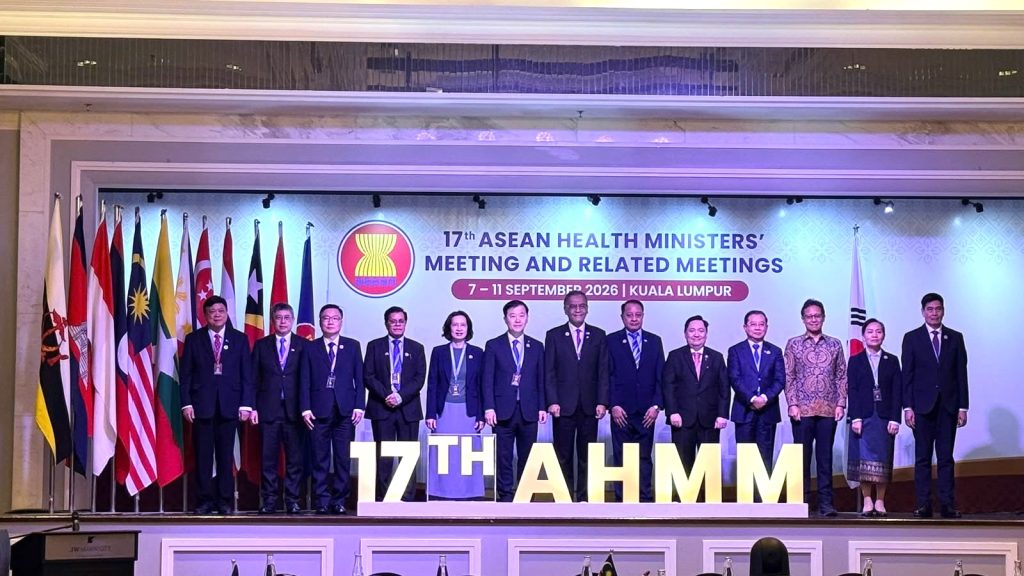
Kuala Lumpur, Malaysia – Indonesia has once again strengthened its role in regional health cooperation through various strategic achievements in the 17th ASEAN Health Ministers' Meeting (17th AHMM ) and related meetings. The series of meetings, held from 7–11 September 2026 in Kuala Lumpur, Malaysia, began with the Preparatory Senior Officials' Meeting on Health Development (PrepSOM). The meeting produced various strategic documents that will set a new direction for ASEAN health cooperation over the next five years, while strengthening regional health resilience, health sector governance, and ASEAN's partnerships with partner countries.
The Indonesian delegation was led by Minister of Health Budi Gunadi Sadikin, along with representatives from the Ministry of Health, the Ministry of Foreign Affairs, and the National Health Insurance (BPJS Kesehatan). The meeting brought together ASEAN Health Ministers and ASEAN dialogue partners, namely Japan, the People's Republic of China, the Republic of Korea, and the United States. The delegates and partners discussed strengthening regional health cooperation in addressing increasingly complex health challenges, ranging from infectious and non-communicable diseases, pandemic preparedness, and strengthening resilient and sustainable health systems.
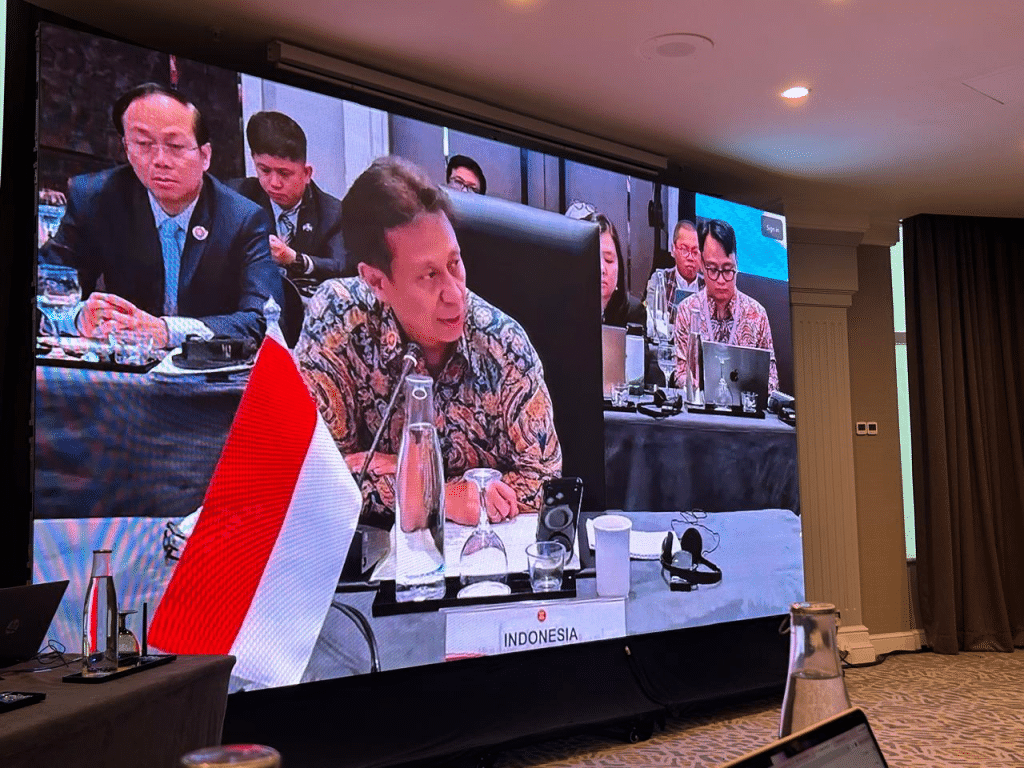
At the AHMM Plenary Session, Indonesia emphasized that regional health challenges cannot be addressed by a single ministry or country alone. Strengthening solidarity and collective action are key to realizing a more resilient ASEAN health system prepared to face future challenges.
" No single ministry or country can alone ensure the health of 700 million ASEAN citizens. Our strength lies in what we do together. Let us conclude this meeting not only with a declaration, but also with concrete steps towards a healthier and more resilient ASEAN," said Health Minister Budi on Thursday (September 10).
Building a New Direction for ASEAN Health Cooperation
As a key driver in the development of various strategic ASEAN health agendas, Indonesia actively contributed to the discussion, negotiation, and finalization of various documents adopted at the meeting. These contributions strengthened Indonesia's role in promoting a more resilient, adaptive, and results-oriented ASEAN health agenda.
One of the key achievements of the 17th AHMM was the adoption of the ASEAN Strategic Health Agenda (ASHA) 2026–2030, which serves as a new strategic framework for ASEAN health cooperation for the next five years. This document prioritizes strengthening health systems, enhancing health resilience, meaningful partnerships, and more effective, results-based governance.
Along with the adoption of ASHA, the meeting also agreed on the Governance and Implementation Mechanism (GIM), Rules of Procedure (ROP) on ASEAN Health Sector Partnerships and Engagement with Entities , and Terms of Reference (TOR) of ASEAN Health Clusters as the foundation of new governance that ensures the implementation of the ASEAN health agenda takes place in a more focused, measurable, and accountable manner.
In line with this, Deputy Secretary-General of ASEAN for the ASEAN Socio-Cultural Community (ASCC), San Lwin, said that the success of the ASEAN health agenda will be largely determined by consistent implementation and strong partnerships.
“As we move forward with the implementation of ASHA 2026–2030, these partnerships will continue to provide support to drive innovation, facilitate knowledge exchange, and strengthen regional health cooperation,” said San Lwin.
He added that the value of ASEAN health cooperation lies not only in the strategies developed, but in the tangible impact it has on the health and well-being of people across the region.
Strengthening Regional Health Resilience Architecture
Indonesia continues to push for the strengthening of ASEAN's health resilience architecture by accelerating the operationalization of the ASEAN Centre for Public Health Emergencies and Emerging Diseases (ACPHEED). In the Special Session on ACPHEED , Indonesia emphasized the need for the Establishment Agreement (EA) to be finalized immediately so that ACPHEED can be fully operational and provide tangible benefits to the region. Indonesia also encouraged the completion of legal aspects to go hand in hand with the operational readiness of each pillar of ACPHEED so that its benefits can be immediately felt by all ASEAN member countries.
At the session, the ACPHEED host countries, along with all ASEAN member states, successfully agreed on steps to accelerate the completion of the EA, including a roadmap towards its signing, which is targeted for the 49th ASEAN Summit . Indonesia also proposed strengthening the governance of the partnership and the operationalization of ACPHEED to ensure the center can carry out its functions effectively and sustainably.
In addition, Indonesia also continues to encourage strengthening regional medical product security and self-reliance through the development of the ASEAN Diagnostics Security and Self-Reliance (ADxSSR) initiative and complementing the ASEAN Vaccine Security and Self-Reliance (AVSSR) and ASEAN Drug Security and Self-Reliance (ADSSR) initiatives as an effort to strengthen production capacity and supply chain resilience of health products in the region.
Expanding ASEAN Strategic Partnership
This meeting also produced six Joint Statements that strengthen ASEAN health cooperation with partner countries, namely the 17th ASEAN Health Ministers' Meeting, the 11th ASEAN Plus Three Health Ministers' Meeting, the 10th ASEAN-China Health Ministers' Meeting, the 3rd ASEAN -Republic of Korea Health Ministers' Meeting , the 1st ASEAN-United States Health Ministers' Meeting and the 1st ASEAN -Japan Health Ministers' Meeting . All of these documents have been aligned with the ASHA 2026–2030 priorities as a shared framework for developing regional health cooperation.
In various meetings with partner countries, Indonesia has consistently pushed for strengthened cooperation on priority issues, including Universal Health Coverage (UHC), One Health , strengthening primary health care services, digital health and the use of artificial intelligence, pandemic preparedness, strengthening laboratories and surveillance, and enhancing regional resilience through the development of vaccines, drugs, and diagnostics. Support for the operationalization of ACPHEED and strengthening regional capacity are also important agenda items reflected in these Joint Statements.
Indonesia Affirms Role in Regional Health Diplomacy
In addition to the main session, Indonesia also actively participated in various side events discussing strengthening cooperation in the fields of medical devices, integrated lung health, rare diseases , tobacco control, and innovation in health system strengthening. These forums were used to expand cooperation networks and identify collaboration opportunities that could support the implementation of ASHA 2026–2030.
Indonesia's active participation in the 17th AHMM and related meetings affirms its commitment to continuously strengthening health diplomacy as a strategic instrument in building a more resilient, inclusive, and prepared regional health system to face future health challenges. Through its contributions to the formulation of various policies, strengthening the regional health resilience architecture, and developing strategic partnerships with partner countries, Indonesia continues to play a role in realizing the vision of "Healthy ASEAN: Together Towards Equitable, Future-Ready Health Systems." (Author: Rita Ratna Puri, Editor: HDI Work Team)