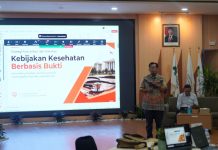

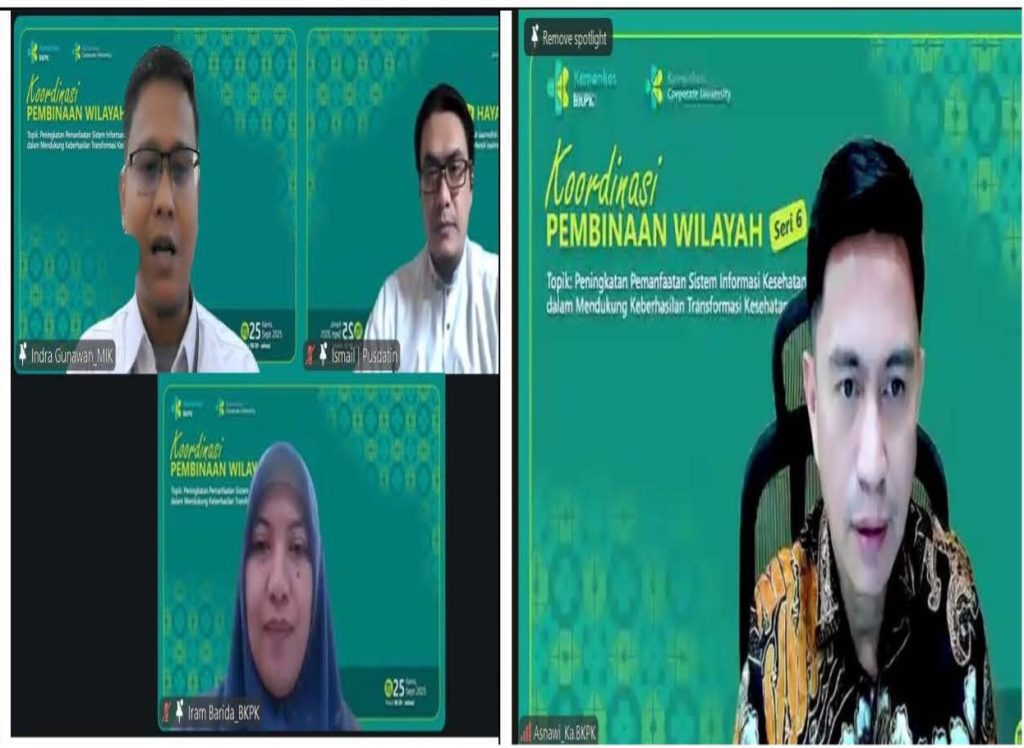
Jakarta – The Ministry of Health (Kemenkes) held its sixth Regional Development Coordination Meeting to accelerate the use of health information systems to support the success of integrated health transformation. The online meeting (September 25) was attended by nearly 300 participants from provincial and district/city health offices. The meeting highlighted the urgency of integrating hundreds of health applications into a single national platform, SATUSEHAT, to support the success of health transformation.
The event began with a report from the Secretary of the Health Development Policy Agency (BKPK), Etik Retno Wiyati. Etik stated that this topic was chosen because it is a frequently complained-about issue from local governments. "The problem is the large number of information systems that must be accessed and filled out by our colleagues," she said in her opening remarks. She hoped this forum would provide a platform to convey current policies and find solutions to challenges in the field.
Further strategies related to this topic will be discussed. Following this meeting, there will be meetings at each regional office for more technical matters.
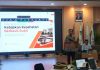
The Head of the BKPK, Prof. Asnawi Abdullah, emphasized in his remarks that every piece of data collected from various villages is truly meaningful. "Every figure we send to the district, provincial, and central government is truly meaningful for our various purposes, both for planning and policy," he said.
Prof. Asnawi stated that the data policy implemented could generate policies to strengthen our health system and build a strong foundation for this nation to become a developed nation by 2045.
The BKPK head questioned whether policymakers ever felt frustrated by having to make decisions without accurate data or allocating resources, such as medicines and vaccines, based solely on estimates. He argued that this situation is a sign that the power of data is not being fully utilized.
"Without a robust information system, we're like driving in the dark without lights. We're moving, but we don't know where we're going," Prof. Asnawi asserted. He envisions an ecosystem where a pregnant woman's medical history in East Nusa Tenggara (NTT) can instantly appear on a doctor's screen in Bali because the data is integrated. To that end, he urges everyone to fundamentally shift their perspective. "Let's change our perspective. Data is not an administrative burden; it's a tool to fight for the people's right to health," he urged.
Prof. Asnawi stated that this integrated data requires vertical and horizontal collaboration, and that much remains to be improved. Many applications are only for reporting purposes, not for policy formulation.
On this auspicious occasion, the Head of the BKPK emphasized the crucial importance of building a data culture. "Not only operators should understand data, but also heads of departments, heads of community health centers, heads of hospitals, and even village heads," he explained. Because the best decisions are born from shared understanding of data.
The Ministry of Health (Kemenkes) introduced the SATUSEHAT platform as a solution. This platform is designed to integrate all health data, from patient medical records across various healthcare facilities to drug and vaccine logistics data. "With the SATUSEHAT platform, which focuses on integrating all healthcare service processes and transactions, it will be one of the fundamental solutions to this challenge," explained Ismail from the Data and Information Center, Ministry of Health. SATUSEHAT makes it easier for the public, including the elderly, to access health information.
Ismail explained that SATUSEHAT simplifies the application to ease the burden on health facilities as the main data source (SIMPUS/SIMRS), in addition to the community (SATUSEHAT Mobile) and health workers (SATUSEHAT IndonesiaKu).
Currently, the SATUSEHAT Ecosystem consists of SATUSEHAT Mobile (community), SATUSEHAT IndonesiaKu (healthcare workers/cadres), SATUSEHAT Data (decision makers), SATUSEHAT Medical Records (health care facilities), SATUSEHAT Prescriptions, SATUSEHAT Logistics (pharmacies), SATUSEHAT Claims (management module), SATUSEHAT SDMK (healthcare personnel). This entire ecosystem will connect all health elements to generate information.
SATUSEHAT is a platform connecting the health data ecosystem and the entire system is protected by national regulations.
One form of simplification is the development of SATUSEHAT Logistics, which will integrate dozens of applications in the pharmaceutical and medical device (farmalkes) sector. Nuni Anindita from the Directorate General of Pharmacy and Health Equipment (Pharmalkes) explained that this step is crucial for efficiency. "The need to simplify the system is crucial. For logistics management itself, the simplification is achieved through the development of Satu Sehat Logistik," Nuni explained. Through this system, real-time monitoring of the distribution of drugs, vaccines, and other medical supplies can be carried out from upstream to downstream.
Nuni explained that there are 37 active applications at the Directorate General of Pharmaceutical and Medical Devices that require simplified user experience. Therefore, integration through SATUSEHAT is necessary to support national data interoperability and maintain the quality of evidence-based policy . (Author: Fachrudin Ali, Editor: HDI Work Team)