
Author: (Dr. dr. Tri Maharani, M.Si., Sp.EM., Subsp. Toxin(K), FICEP, FIMMA , Pusjak SKK, BKPK Ministry of Health of the Republic of Indonesia)
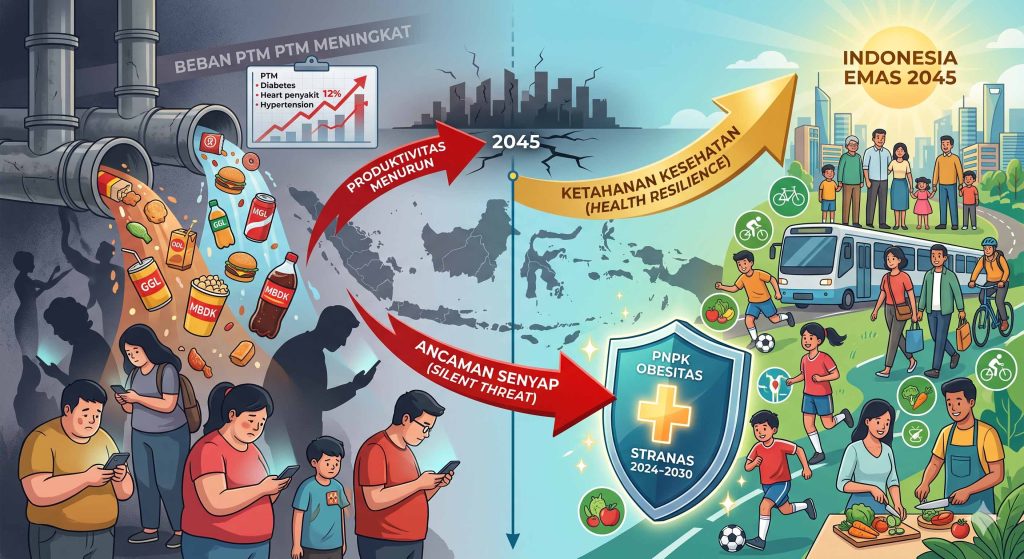
When we talk about threats to public health security, our collective attention often shifts to the dramatic epicenters of emergencies: massive infectious disease outbreaks, natural disasters, or global bioterrorism threats. However, there is another threat that moves silently , developing slowly without public panic, yet possessing tremendous destructive power for the quality of human resources and the fiscal sustainability of nations. That threat is the obesity pandemic.
In the past two decades, Indonesia has become more than just a malnutrition problem; it has become trapped in the triple burden of malnutrition . While we are still battling malnutrition, including stunting and wasting, the prevalence of overweight and obesity has skyrocketed across all levels of society, from urban to rural areas, and from adults to children. Furthermore, micronutrient deficiencies are prevalent across all age groups. Obesity is no longer a cosmetic issue, an aesthetic issue, or simply a poor lifestyle choice. It is a complex, chronic disease that is testing the limits of our national health system.
Anatomy of a Crisis: Why is Obesity a Systemic Problem?
Often, there's a fatal flaw in the way society, and even some clinicians, views obesity entirely on the shoulders of the individual. Obese patients often experience weight stigma and are perceived as lacking discipline, being lazy, or unable to control their appetite.
This reductionist view must be stopped. Numerous global and domestic studies show that the sharp rise in obesity prevalence is driven by a massively obesogenic environment, one that actively promotes high calorie intake while restricting energy expenditure.
1. Explosion in Sugar, Salt, and Fat (GGL) Consumption
Food modernization and globalization have transformed the landscape of Indonesian dining tables. Fresh, nutrient-dense foods are now less economically competitive and accessible than ultra-processed foods ( UPFs ) and packaged sweetened beverages (MBDKs). Ease of access through digital platforms means that high-energy, simple-carbohydrate, but micronutrient-poor foods can reach consumers within minutes at very affordable prices.
2. Epidemiological Transition and Sedentary Behavior
Rapid urbanization has not been matched by the provision of safe public spaces for physical activity. Inadequate pedestrian paths, a heavy reliance on motorized vehicles, and the dominance of digital-based work in front of screens have shifted society's physical activity profile to a very low level ( a sedentary lifestyle ). The human body, evolutionarily designed for movement, is now forced to survive in a constant, chronic calorie surplus.
Clinical Implications and Macroeconomic Burden
From a medical emergency and disease management perspective, obesity is a precursor to multisystemic disorders . Excessive adipose tissue accumulation triggers a low-grade chronic inflammatory state that damages the vascular endothelium and disrupts metabolic homeostasis.
The direct impact of this pathophysiology is the explosion of cases of Non-Communicable Diseases (NCDs) in Indonesia:
- Type 2 Diabetes Mellitus: Obesity is the most dominant risk factor that triggers insulin resistance.
- Coronary Heart Disease and Stroke: Dyslipidemia and hypertension accompanying obesity accelerate the process of atherosclerosis.
- Malignancy: Breast, colorectal, and endometrial cancers have a strong correlation with obesity status.
When the COVID- pandemic 14 15 until the new variants hit, we learned a very expensive clinical lesson: patients with comorbid obesity have significantly higher mortality and morbidity rates in the Intensive Care Unit (ICU) due to impaired pulmonary ventilation mechanics and a more aggressive cytokine storm.
Macroeconomically, this situation creates a financial time bomb. The catastrophic costs of treating obesity complications, such as hemodialysis due to diabetic nephropathy or coronary heart disease interventions, consume the largest portion of the National Health Insurance (JKN/BPJS) budget. Furthermore, this crisis is eroding the productivity of the active workforce due to lost workdays due to short-term disability and premature mortality.
Regulatory Milestones: 2025 Adult Obesity National Action Plan and 2024–2030 National Statute
Recognizing the magnitude of this threat, the Indonesian government, through the Ministry of Health, has taken a progressive strategic step. The issuance of Minister of Health Decree No. HK.01.07/MENKES/509/2025 concerning the National Guidelines for Clinical Services (PNPK) for the Management of Adult Obesity represents a quantum leap in the standardization of medical interventions in Indonesia.
This PNPK lays a strong scientific foundation for how obesity should be diagnosed, classified based on cardiometabolic risk, and managed in a multidisciplinary manner. These guidelines provide clear guidance for clinicians regarding:
- Medical Nutrition Therapy: Personalized, evidence-based dietary interventions, not simply unsustainable, extreme calorie restriction.
- Physical Exercise Prescription: Measured and safe physical activity for patients with high biomechanical loads.
- Pharmacotherapy and Bariatric Surgery Interventions: Strict clinical guidelines on when modern anti-obesity drugs or metabolic surgical procedures should be implemented as curative options.
These clinical guidelines are fully integrated into the 2024–2030 National Strategy (Stranas) for Obesity Management. This strategy mandates that obesity management should not be confined downstream (in specialist physicians' offices) but rather should be managed comprehensively from the upstream through a Health in All Policies approach.
Transforming Primary Care as the Frontline
The key to successful implementation of this policy lies in repositioning the function of Primary Health Services (Community Health Centers and Primary Clinics) as centers of control for prevention. Through Primary Care Transformation, the intervention approach must shift from a reactive-curative to a proactive-preventive one.
- Massive and Accurate Screening: Primary services must be able to conduct regular monitoring of Body Mass Index (BMI) and waist circumference (abdominal obesity) at the community level, utilizing the Posyandu Prima network.
- Integrated Behavioral Counseling: Community Health Centers must be strengthened with nutritionists and counselors who are able to carry out motivational interviewing to support long-term behavior change at the family level.
- Utilization of Digital Technology Architecture: Integration of obesity screening data into national digital health platforms (such as SATUSEHAT) enables early detection and monitoring of patient therapy adherence. real-time.
Multisectoral Policy Recommendations: Towards Upstream Intervention
As a nation, we must have the courage to make bold policy decisions beyond the health sector to restructure our environment. Some crucial upstream interventions include:
| Sector | Strategic Intervention | Expected Impact |
| Fiscal / Financial | Implementation of Excise on Packaged Sweetened Beverages (MBDK) and highly processed foods. | Reducing purchasing power for unhealthy products and encouraging industrial reformulation. |
| Food / Industry | Obligation to include nutrition labels Front-of-Pack (FoP) that is clear and easy to understand on the front of the packaging. | Instantly improve consumer nutritional literacy when purchasing products. |
| Education | Ban on the sale of high GGL foods in school environments and revitalization of the physical activity curriculum. | Breaking the chain of obesity from an early age and forming intergenerational healthy habits. |
| Urban Planning / Public Works | Development of public transportation infrastructure integrated with pedestrian and bicycle-friendly areas. | Forcing an increase in people's daily energy expenditure through active mobility. |
Safeguarding Indonesia's Golden Age 2045
The grand vision of Golden Indonesia 2045 projects Indonesia as one of the world's five largest economic powers. However, this vision is based on one absolute assumption: we have a Demographic Bonus, a surplus of a healthy, intelligent, and productive workforce.
If the prevalence of obesity and its associated diseases continues to rise at current rates, the demographic bonus will turn into a "demographic disaster." Our workforce will be burdened by chronic morbidity, and state funds that should be allocated to innovation, education, and infrastructure development will instead be siphoned off to pay for the treatment of preventable diseases.
Conclusion
The publication of the 2025 Adult Obesity Guidelines and the 2024–2030 National Obesity Management Strategy is a valuable opportunity. Obesity is a real test of our national health resilience. We can no longer turn a blind eye or simply urge the public to "eat in moderation."
Reversing this epidemic requires strong leadership, bold regulations, seamless cross-sectoral coordination, and the active involvement of all elements of society. Tackling obesity is a fundamental investment in developing the Indonesian people. Only with a healthy and resilient society can we safeguard our nation's sovereignty and ensure Indonesia's bright future.