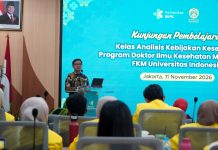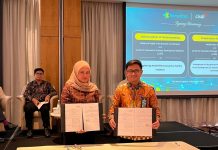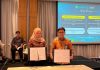


Jakarta – The Head of the Health Development Policy Agency (BKPK) of the Indonesian Ministry of Health, Prof. Asnawi Abdullah, emphasized that the Ministry of Health continues to strive to synchronize financing policies and health programs so that each facility can manage health insurance funds effectively. He conveyed this during the 8th Regional Development Coordination Activity held by the BKPK (November 24) in a hybrid format. The topic discussed was Optimizing the Utilization of Non-Capitation Funds in Primary Health Care Facilities (FKTP).
"The focus of today's discussion is to improve understanding and synergy in the management of Community Health Insurance (JKN) funds, particularly in non-BLU primary healthcare facilities. Optimizing these non-capitation funds is crucial to support improved service quality and sustainable healthcare financing," said Prof. Asnawi in his remarks.
In the committee's report, BKPK Secretary Etίk Retno Wiyati emphasized the urgency of aligning regional governments' understanding of the non-capitation fund optimization policy. She noted that many regions have requested hearings due to their lack of understanding of the policy's implementation.
"If this policy can be disseminated evenly across the regions, the audience will no longer be about basic issues but will instead focus on assessing the program's success on the ground," he said.
Etίk explained that the latest evaluation at the Health Sector Policy Coordination Forum (KKSK) showed that many FKTPs had not yet implemented a BLUD-based financial management pattern, and did not yet understand the optimal use of non-capitation funds.
He hopes regional development activities can bridge this information gap. "We ask for the attention of local governments to work together to ensure the optimization of non-capitation funds," he said.
Three speakers were present and outlined the importance of optimizing capitation and non-capitation funds to maintain the sustainability of the quality of JKN services.
Rahma Anindita from BPJS Kesehatan said that while the expansion of health insurance coverage has been significant, optimizing fund utilization remains a significant challenge.
"By October 2025, 283 million people, or 99,34 percent of the population, will be registered with the National Health Insurance (JKN). However, the challenge isn't just about participation, but also how service funds are truly utilized to improve the quality of public services," he said.
He added that service utilization increased to 673,9 million utilizations per year, indicating the need for efficient and equitable financing management across all health facilities.
In terms of regulations on fund utilization, Ratu Martiningsih from the Ministry of Health's Health Financing Center emphasized that each FKTP must clearly understand the capitation and non-capitation payment models to prevent mismanagement.
"BPJS only transfers funds to healthcare facilities, but once the funds are received, the primary health care facility (FKTP) must accurately monitor their use. Every service within the FKTP's competence must be completed there," Ratu explained.
Ratu explained that capitation is paid upfront and has the potential to lead to undertreatment if not managed with performance standards, while non-capitation is fee-for-service for services that require greater resources.
Meanwhile, Fusia Meidiawaty, Head of the Bogor Regency Health Office, emphasized that the success of financing governance is greatly influenced by the region's readiness to improve the institutional status of its facilities. Bogor Regency has implemented the BLUD mechanism in most community health centers (Puskesmas).
"Of the 101 community health centers (Puskesmas), 91 are already BLUD (Directorate General of Public Services) and 10 are still non-BLUD. Our target is for all of them to become BLUD by 2026, so that funds can be transferred more quickly and directly to the Puskesmas," he said.
He outlined the special capitation fund allocation for non-BLUD community health centers, with 70 percent for health services and 30 percent for operations, as stipulated in the Regent's Decree. However, several obstacles remain, such as suboptimal claims and limited financial resources.
"Because many healthcare workers also handle financial management, human resource capacity building must be ongoing. Monitoring and evaluation of financial management are essential," he added. (Author: Fachrudin Ali, Editor: HDI Work Team)