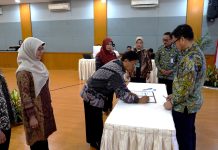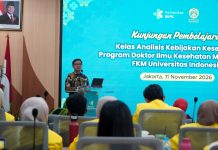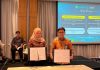


Sukoharjo– The Center for Health Financing and Decentralization Policy of the Health Development Policy Agency (BKPK) of the Ministry of Health (Kemenkes) held an Advocacy and Socialization Meeting on Health Financing Policy in the National Health Insurance (JKN) Program. The activity was held together with partner member of the Indonesian House of Representatives Commission IX, Rahmad Handoyo at the Makamhaji Village Hall, Sukoharjo, Central Java (11/10).
The meeting was attended by cross-sectors, from the DPRD, the District Health Office (Dinkes), the Provincial Health Office, the Social Service and BPJS Kesehatan. Rahmad as a representative of the Central Indonesian House of Representatives from the Central Java electoral district (dapil) on that occasion reminded the public to maintain a healthy lifestyle. This is considering the still high number of non-communicable diseases in Indonesia.
"Now Indonesia is among the world champions, there are more than 36 million or 13 percent of people who suffer from diabetes, even though that is not heart disease, not to mention stroke and others," said Rahmad.
Representing the Head of the Center for Health Financing and Decentralization, Ministry of Health of the Republic of Indonesia, Tri Juni Angkasawati in front of 200 residents of Makamhaji sub-district, revealed that non-communicable diseases require a lot of funding.
"Diseases that cause many deaths such as stroke, heart disease and diabetes have very high costs, for that reason the government guarantees their treatment," said Tri Juni.
Furthermore, Tri Juni invited the public to utilize the JKN program in accordance with the mandate of the law so that the public can get health financing protection when they are sick.
"Make the best use of it, so that by having a national health insurance card, you can be protected from the financial side and not cause financial bankruptcy to your family," he concluded.
According to BPJS Kesehatan data, 779.002 or 89 percent of Sukoharjo residents have registered as participants. Socialization is needed so that the level of JKN participant coverage in Sukoharjo Regency can be further improved. (Author Ahdiyat Firmana/Editor Fachrudin Ali)