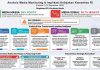


Jakarta – The Head of the Health Development Policy Agency (BKPK), Prof. Asnawi Abdullah, announced the success of BKPK employees who have achieved a 100 percent participation rate in filling out the Ministry of Health's (Kemenkes) work culture pulse check in 2026. He conveyed this at the BKPK Kemenkes Staff Coordination Meeting (Rakorstaf) on Thursday (2/7).
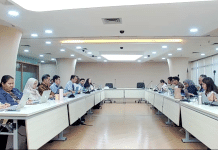
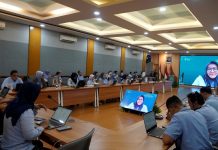
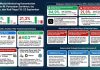
The Staff Coordination Meeting (Rakorstaf) was attended by all BKPK employees and was presented interactively through a presentation of the Ministry of Health's Work Culture Pulse Check . This activity aims to monitor, evaluate, and measure the effectiveness of changes in work culture within the Ministry of Health's internal ASN environment. Periodic surveys were conducted to map the implementation of BerAKHLAK values, the level of employee engagement , and identify challenges and areas for improvement within the organization. In addition to the introduction, the Staff Coordination Meeting also included a discussion on workload management ( Navigating Your Workload ), a session sharing innovations from the 2025 CPNS, and the farewell of two employees who entered retirement.
The Head of the BKPK (Investigating Agency for the Acceleration of Corruption) expressed his appreciation to all employees for this extraordinary achievement, completing the pulse checks ahead of the deadline on July 2, 2026. He emphasized that the survey was not merely a data collection formality, but rather a crucial instrument that serves as a baseline or starting point for evaluating the extent to which all elements within the BKPK have adopted the new work culture transformation.
In an effort to realize real transformation, the Head of the BKPK outlined several strategies and evaluations related to performance harmonization. One key point highlighted was improvements to the assignment management system. He strongly urged all levels of leadership, including the Project Management Office (PMO) team, to always have anticipatory measures in place, including consistently preparing supporting materials and reviewing them to ensure they are always prepared for unexpected assignments.
In addition to anticipating sudden assignments, clear instructions before execution are a crucial pillar in improving organizational efficiency. The Head of the BKPK observed a phenomenon where employees often immediately declare their readiness to carry out tasks without truly understanding the details. This often results in tasks being executed based solely on assumptions, personal imagination, or biased interpretations, resulting in the end result deviating from the initial instructions and wasting valuable time. Regarding this, Prof. Asnawi gave a firm instruction, "If it's not clear , don't do it yet. Ask first so we don't waste our time," he explained.

To support productivity and the work evaluation process, every employee is also encouraged to diligently record their work using a digital calendar such as Google Calendar. With detailed recording from morning to night, the data can later be processed more easily. The Head of the BKPK (Investigating Corruption Eradication Commission) gave an example of how calendar data can be extracted and analyzed using artificial intelligence (AI) to see comprehensive activity, for example, how much time is spent on work, family, and personal matters in a year. However, he cautioned that no matter how sophisticated the analysis process, it will not work if employees are not disciplined in recording from the start.
On that occasion, the Head of the BKPK specifically instructed employees to complete logbooks and record daily work activities in detail. Logbooks not only assess each employee's workload but also serve as a tool for monitoring, coaching, and evaluating performance.
Furthermore, the Head of BKPK motivated his employees to always instill a superior mindset for the advancement of the institution.
"We must always be above average. If we want to progress, succeed, and make our organization the pride of the Ministry of Health, we must always be above average," he stressed.
Through this Staff Coordination Meeting, it is hoped that a spirit of togetherness, commitment, and a positive work culture will continue to grow within the organization, thereby strengthening the BKPK's role as an institution developing adaptive, evidence-based health policies that impact national health development. (Author: Fachrudin Ali, Editor: HDI Work Team)