Ditapis dengan

The Primer Design of Domain-Specific C-Terminus of the Avian H5N1 NS Gene fro…
The avian influenza (AI) H5N1 viruses have caused nearly 600 fatal cases in the world since 2003. The H5N1 AI virus is still circulating in wild birds and domestic. One of the known of AI virus pathogenicity is the ability of the nonstructural protein (NS1 and NS2) to induce cytokine storm. Mutations of the NS1 and NS2 proteins may aggravate infections. Genetic sequences of NS gene that enco…
- Edisi
- -
- ISBN/ISSN
- 2087-7021
- Deskripsi Fisik
- -
- Judul Seri
- -
- No. Panggil
- Health Science Journal of Indonesia, 5 (2) : 83-88
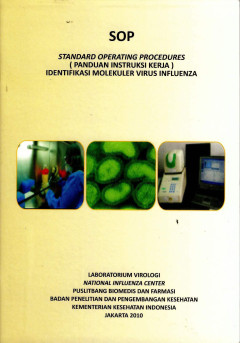
SOP: Standard Operating Procedures (Panduan Instruksi Kerja)Identifikasi Mole…
- Edisi
- -
- ISBN/ISSN
- 978-979-8270-84-7
- Deskripsi Fisik
- vii; 40 P; bbl ;illus ; 21 cm
- Judul Seri
- -
- No. Panggil
- SF 995.6.16 HAN 2010
- Edisi
- -
- ISBN/ISSN
- 978-979-8270-84-7
- Deskripsi Fisik
- vii; 40 P; bbl ;illus ; 21 cm
- Judul Seri
- -
- No. Panggil
- SF 995.6.16 HAN 2010
Ulasan Sistematik: Marka Molekular Penanda Patogenitas dan Sebaran Inang Pada…
The epidemic arising out of H5N1 virus infection causes death case and material loss. Mutation of H5N1 virus that signify the increase of pathogenicity and change of dispersal of host response can be used to reference for early warning system of epidemic caused of avian influenza virus. The objective of this research is to obtain information related to molecular markers of pathogenicity of …
- Edisi
- -
- ISBN/ISSN
- 2301-5810
- Deskripsi Fisik
- Jurnal Biotek Mediciana Indonesia
- Judul Seri
- -
- No. Panggil
- Jurnal Biotek Mediciana Indonesia, 2(1)2013: 9-18
Studi Deskriptif Serotipe Human Parainfluenza Virus (HPIV) Kasus ISPA Berat p…
- Edisi
- -
- ISBN/ISSN
- -
- Deskripsi Fisik
- 23p.; bibl.; ilus.; 30 cm.
- Judul Seri
- -
- No. Panggil
- PS1 92
- Edisi
- -
- ISBN/ISSN
- -
- Deskripsi Fisik
- 23p.; bibl.; ilus.; 30 cm.
- Judul Seri
- -
- No. Panggil
- PS1 92
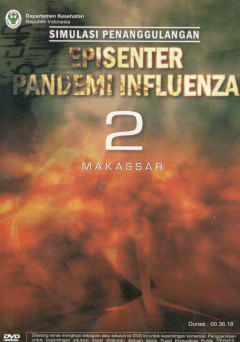
Simulasi penanggulangan episenter pandemi influenza : 2 Makassar
- Edisi
- -
- ISBN/ISSN
- -
- Deskripsi Fisik
- 1 DVD-Video (36:18), berwarna, digital stereo
- Judul Seri
- -
- No. Panggil
- AVM 39 BAD 2009
- Edisi
- -
- ISBN/ISSN
- -
- Deskripsi Fisik
- 1 DVD-Video (36:18), berwarna, digital stereo
- Judul Seri
- -
- No. Panggil
- AVM 39 BAD 2009
Virus Avian Influenza H5n1 : Biologi Molekuler Dan Potensi Penularannya Ke Un…
Dengan adanya kejadian luar biasa yang pertama virus avian influenza H5N1 tahun 1997 semakin jelas bahwa potensi virulensi virus H5N1 telah meluas ke manusia. Review ini disusun untuk memahami karakteristik virus, siklus replikasi virus, mekanisme virus masuk ke dalam hospes, peran hemaglutinin sebagai determinan patogenisitas, urutan basa hemaglutinin yang berperan dalam memicu peningkatan vi…
- Edisi
- -
- ISBN/ISSN
- 2085-868x
- Deskripsi Fisik
- -
- Judul Seri
- -
- No. Panggil
- Vektora, 5(2): 81-94
Antibody Anti H1N1pdm09 Detection from Influenza a Outbreak Cases in Indonesi…
Background: Influenza A virus infection can cause pandemic influenza worldwide. The outbreak of the H1N1 virus occurred in Indonesia in April 2009. A total of 1892 suspected cases of H1N1 were reported between April and the end of December 2009. From 1892 suspected cases, there were only 809 confirmed infected by the H1N1 virus. Since the virus is a new strain, we wanted to know how many cases …
- Edisi
- -
- ISBN/ISSN
- 2087-7021
- Deskripsi Fisik
- -
- Judul Seri
- -
- No. Panggil
- Health Sciences Journal of Indonesia, 4 (1) 2013 :
Penelitian karakterisasi virus influenza dari pemantauan berkala kasus ISPA b…
- Edisi
- -
- ISBN/ISSN
- -
- Deskripsi Fisik
- 31 p.
- Judul Seri
- -
- No. Panggil
- PS1 75
- Edisi
- -
- ISBN/ISSN
- -
- Deskripsi Fisik
- 31 p.
- Judul Seri
- -
- No. Panggil
- PS1 75
Karakterisasi virus influenza dari pemantauan berkalam kasus influenza like i…
- Edisi
- -
- ISBN/ISSN
- -
- Deskripsi Fisik
- 64 p.
- Judul Seri
- -
- No. Panggil
- PS1 74
- Edisi
- -
- ISBN/ISSN
- -
- Deskripsi Fisik
- 64 p.
- Judul Seri
- -
- No. Panggil
- PS1 74
Influence of morinda citrifolia, L Fruit extract as adjuvant on IG-Y producti…
Immunized avian with vaccine, produces specific antibody in the serum as well as in the egg yolk. An adjuvant is used to augment the effects of a vaccine by stimulating the immune response. Morinda citrifolia, L., especially the fruit contains of some chemical compounds such as polysaccharide, scopoletin, damnacanthal, proxeronine and proxeroninase. All those of active compounds, are soluble in…
- Edisi
- -
- ISBN/ISSN
- 0126-1037
- Deskripsi Fisik
- 6p
- Judul Seri
- -
- No. Panggil
- Majalah Farmasi Indonesia, 23 (2) 2012 : 115-120
 Karya Umum
  Filsafat
  Agama
Agama  Ilmu-ilmu Sosial
  Bahasa
  Ilmu-ilmu Murni
  Ilmu-ilmu Terapan
  Kesenian, Hiburan, dan Olahraga
  Kesusastraan
  Geografi dan Sejarah